
Greenland 2015
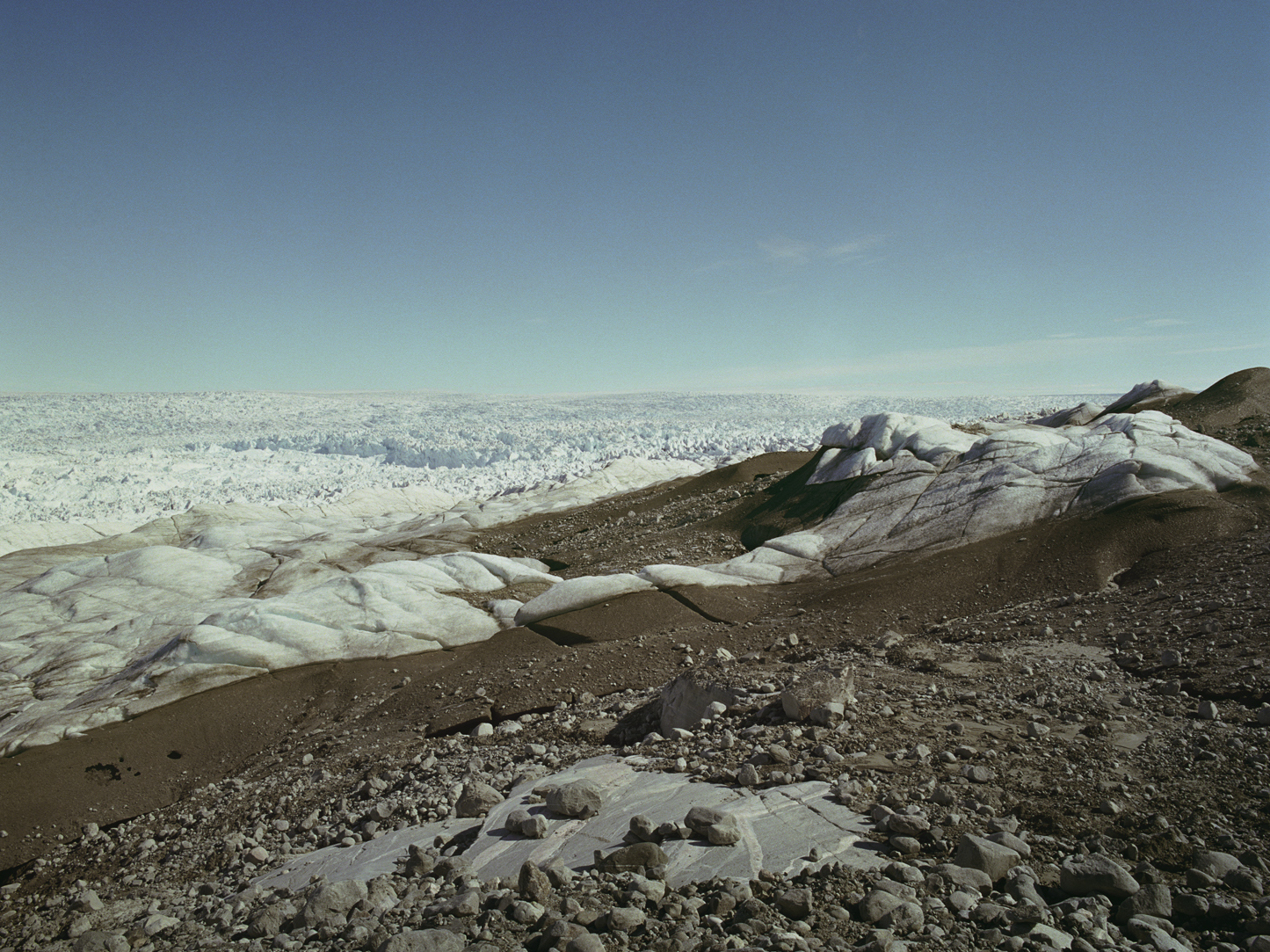
Jakobshavn, Greenland, taken in 2010 on the previous Project Pressure expedition.
The expedition to South Greenland is set for September this year. We will be sending off charity director Klaus Thymann and UK based artist Mariele Neudecker to document the glaciers surrounding Narsarsuaq. If you have any archival imagery of this area do not hesitate to get in touch. For up to date news and developments sign up to the newsletter.
Lewis Glacier at Les Recontres d’Arles
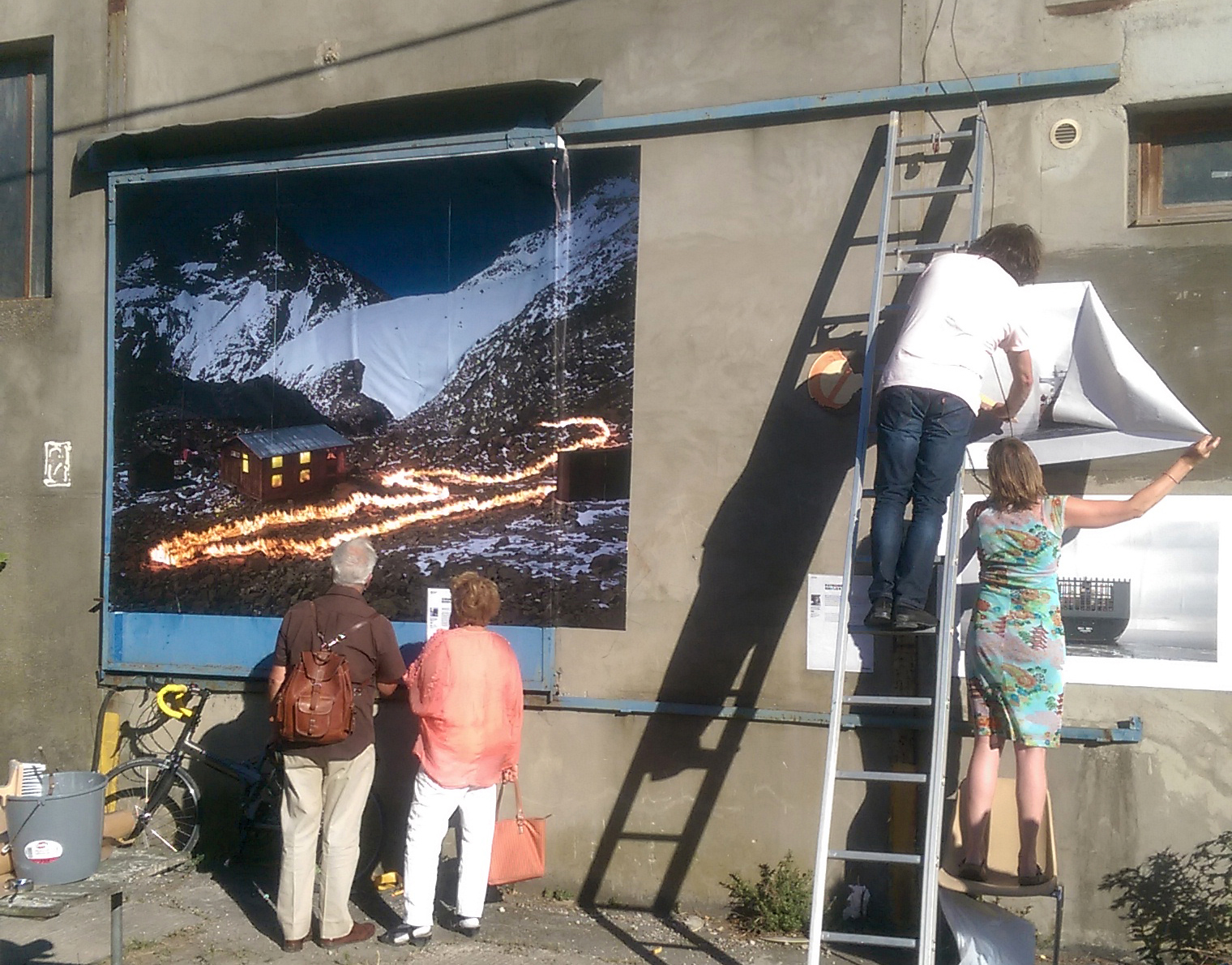
Photo courtesy of Simon Norfolk.
Simon Norfolk’s award winning photographs of Lewis Glacier, Mount Kenya, have been featured at one of the most prolific photography festivals, Les Recontre d’Arles, France. The series, When I am Laid In Earth, was produced in conjunction with Project Pressure and will become part of its artistic archive. It was selected by curators to feature as part of a fringe exhibition and has continued to capture the imaginations of individuals and encourage further awareness of climate change. A newspaper produced for the show, that charts the different aspects of Project Pressure and When I am Laid in Earth, is available as a free download here.
Your Chance to Visit Greenland
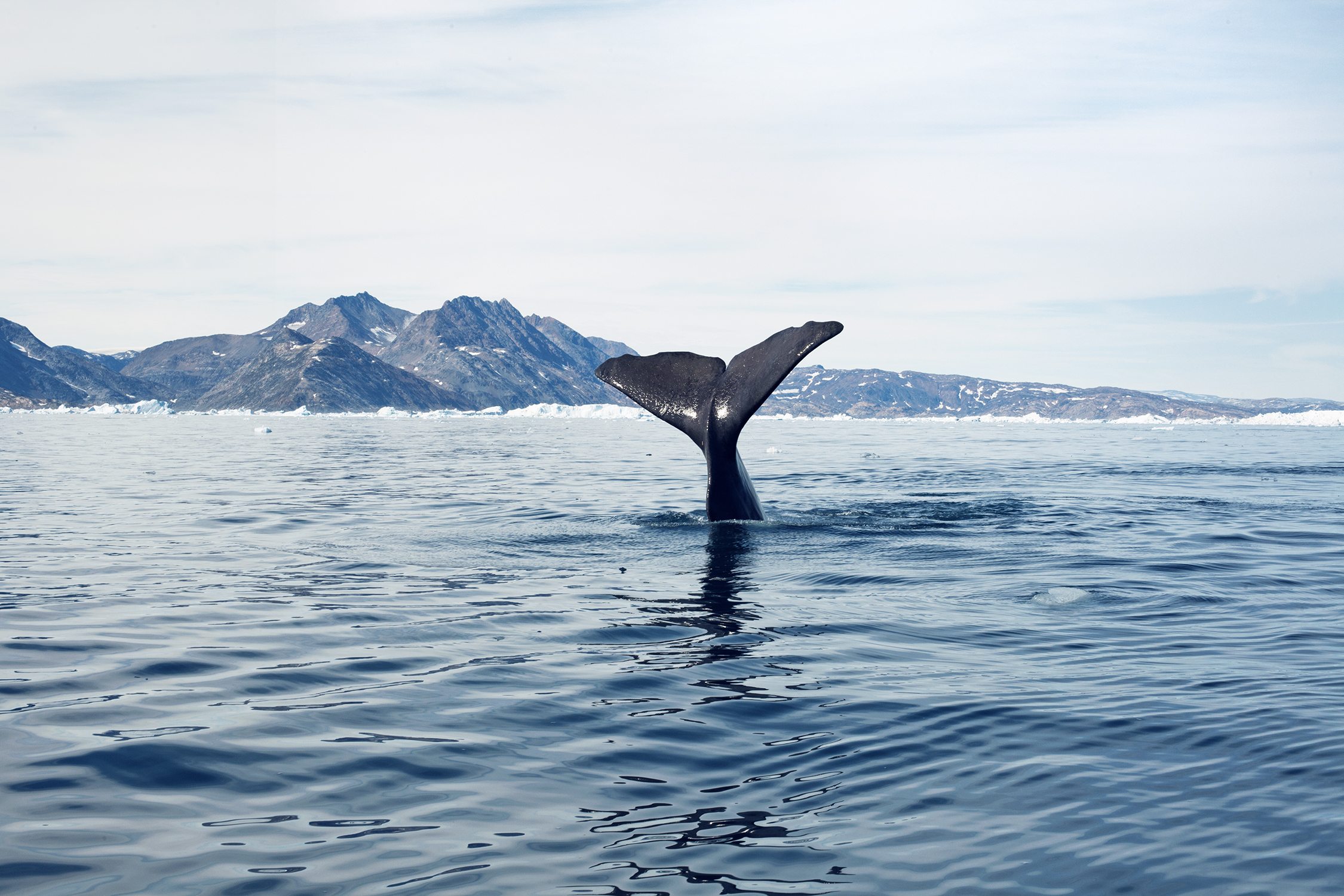
An image from the Project Pressure expedition to East Greenland in 2012, by Klaus Thymann
For the first time this summer Citizen Science are offering individuals the chance to join climate biologist Astrid M Z Bonde PhD on a glacier and wildlife monitoring trip to Greenland. The journey will bridge research and tourism to motivate an interest in the artic and broaden the access of scientific observation that will in turn benefit climate change and biodiversity research.
This trip will provide the opportunity to journey across Western Greenland, from the tundras in Kangerlussuaq to the ice sheets near Disko bay. One aspect of this expedition is to gather pictures of the natural environment to input into apps and databases. This enables Citizen Science to contribute to ongoing research within the field, as well as existing projects, including Project Pressure, that will then be available for both scientists and the public to use.
So why not create your own adventure whilst contributing photographs to Project Pressure’s archive. There are still a few places available on this tour and you can read more here. Quoting Project-pressure.org at point of purchase will get you a discount of 500 DKK (£50) too!
Mariele Neudecker and Project Pressure Partnership
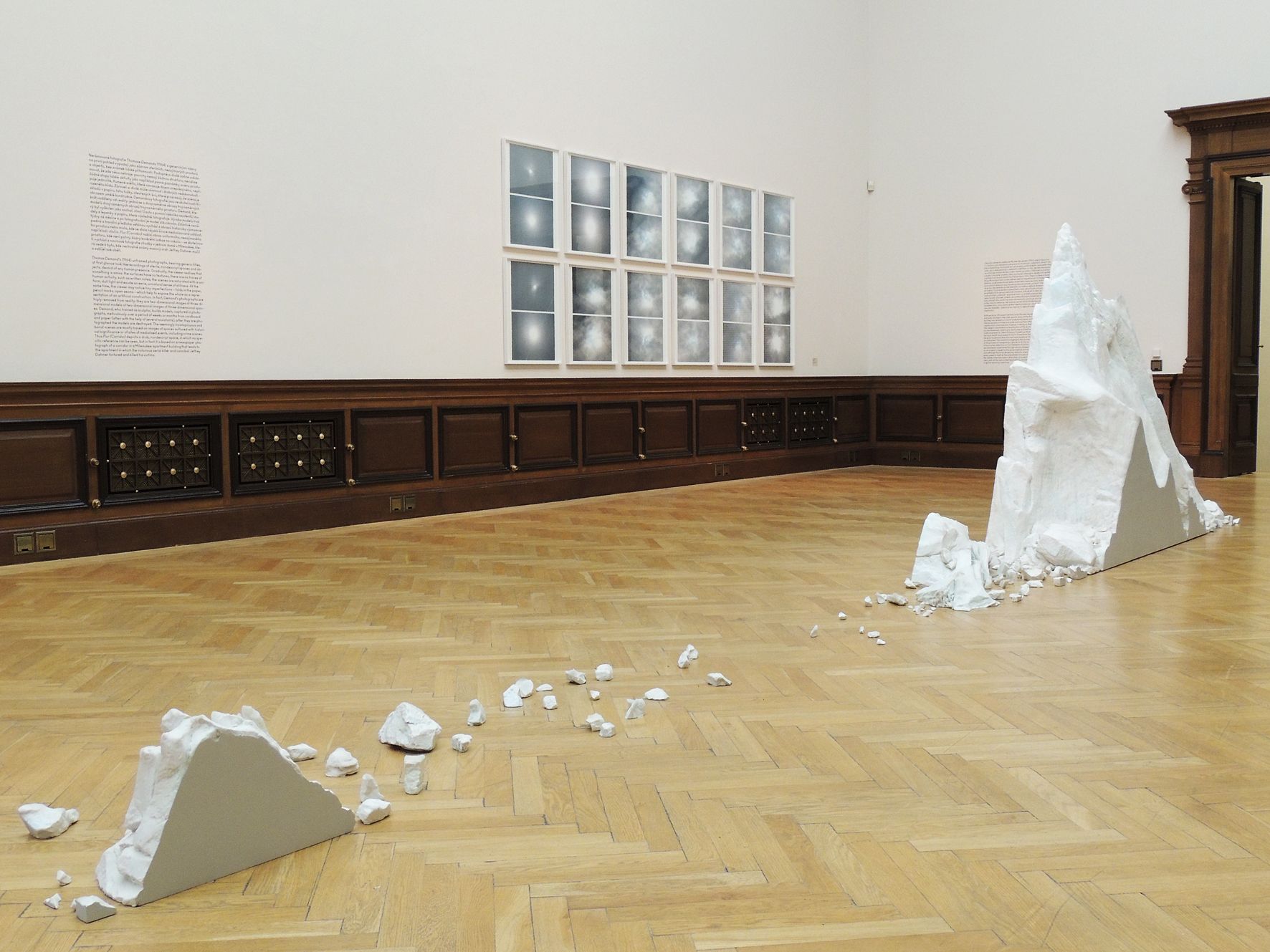
An installation view of There Is Always Something More Important and Recent Futures from MODEL at Rudolfinum, Prague.
Project Pressure are really excited to announce a new artistic partnership with Mariele Neudecker. Neudecker’s work continuously returns to looking at ‘landscape traditions in art, dealing simultaneously with questions around technology and science, collective experience and time.’ This year will see Neudecker travelling to the area surrounding Nuuk in Southwest Greenland, where her multidisciplinary practice will be used to capture glaciers meeting the sea in both still and moving image. Sign up to our newsletter to get regular updates on this exciting expedition.
Norfolk Announced as Winner
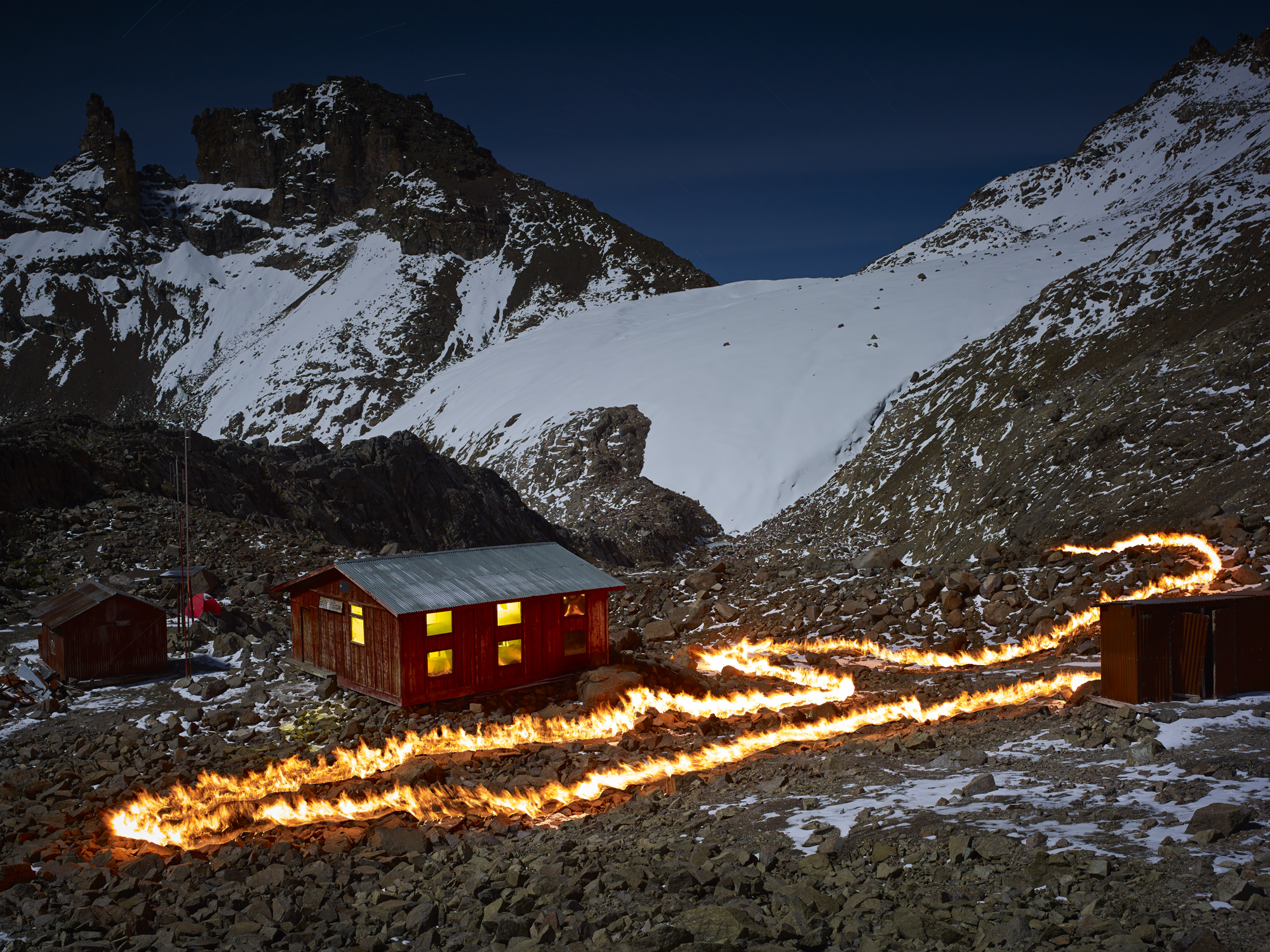
Last week Simon Norfolk’s When I am Laid in Earth was announced winner of the landscape category for Sony World Photography Award. His winning piece depicted an impression of how climate change has affected Mount Kenya’s glaciers. It is Norfolk’s first contribution to the Project Pressure archive and relied on data provided by the Project Pressure team.
When asked about receiving the award Norfolk said;
‘My second Sony – it just gets better and better. A huge thanks to Project Pressure without whom it never would have occurred to me to start thinking about climate change in general and glaciers in particular. Inspirational!’
The data and glacier outlines were sourced, in part, from peer reviewed articles published over the last 50 years. Useful maps were identified within journal articles and the authors were contacted so the relevant first and second hand information could be retrieved. Further information was drawn from the Mount Kenya glacial records held at the National Snow and Ice Data Center (NSIDC); and from the Global Ice Land Measurements from Space (GLIMS) database, which provided current GPS information. Through this methodology it was possible to pinpoint historical glacier outlines onto GPS devices. This allowed Norfolk to track the previous glacial extents.
In utilising a dramatic juxtaposition alongside a simple message Norfolk produced highly potent artwork; creating a powerful tool for communicating climatic and glacial data and raising awareness regarding the impacts of climate change. When I am Laid In Earth was originally featured in The New York Times Magazine last December.
Check out our earlier posts for links to the full series and the behind the scenes video from the expedition.
Science Needs You
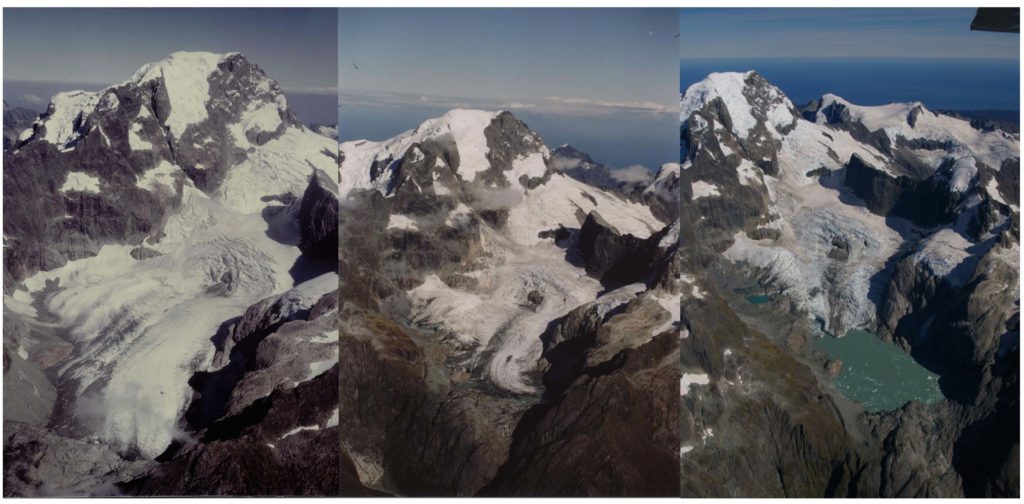
Comparative images of Donne Glacier, NZ, from left to right, 1981, 1998, 2009. Source: Trevor Chinn
In partnership with the World Glacier Monitoring Service, Project Pressure is currently asking for your help in improving a glacial photo database. It may be that you’ve got a trip planned to the Alps, have previously mounted an expedition to the Himalayas, or know of some old glacier photos hidden up in the attic. Whatever the case, check out our list of high priority and important glaciers and get involved. However, do not be discouraged if you have glacial photos not included in this list, any photos are always encouraged and welcomed! Your contributions are a vital part of our mission! For further instructions on how to upload any photos please click here.
Exhibition: Timezone
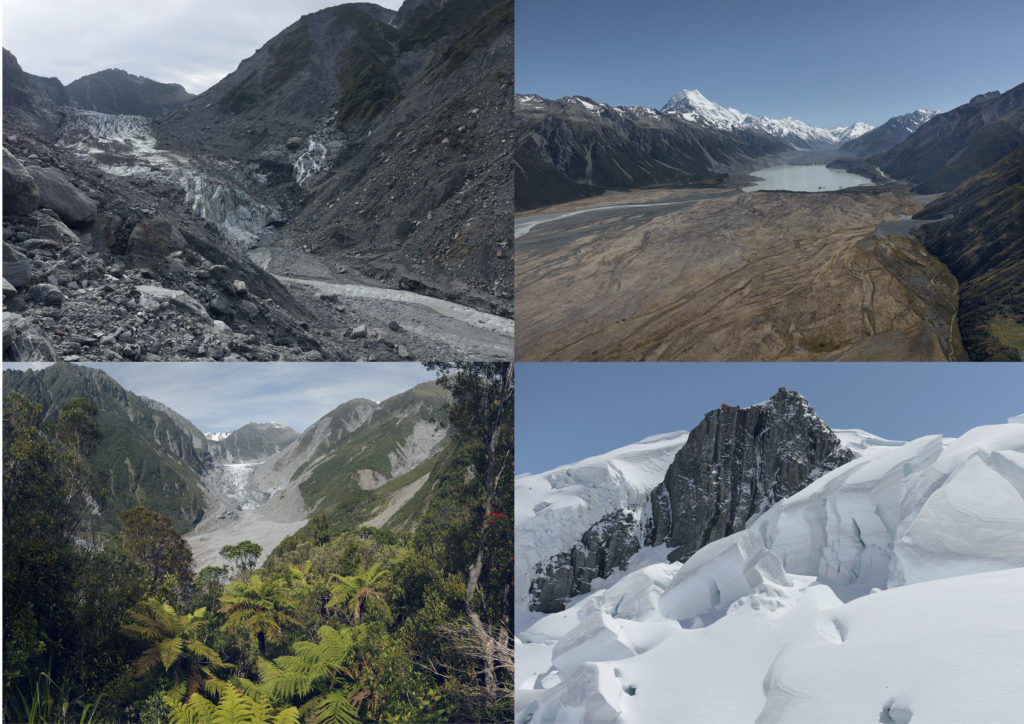
At the beginning of 2015 Klaus Thymann led the Project Pressure team on a challenging expedition in pursuit of the unique beauty found in two of New Zealand’s 3000 glaciers. Generously supported by Casio G-shock the expedition enabled them to enjoy sweeping views of those held within Mount Cook National Park, including the spectacular Tasman and Fox glaciers. The images captured in New Zealand pictured above will be on display alongside other photographs of extreme locations as part of a solo exhibition by Thymann in New York City. All proceeds from print sales will go towards Project Pressure, for more information see here.
Video: When I’m Laid In Earth
When I’m Laid In earth by Antonio Olmos and Simon Norfolk/INSTITUTE
The Sony World Photography Awards has just announced that Simon Norfolk’s photos of Mount Kenya’s glaciers have been shortlisted within the landscape category – well done to Simon and the team.
Videographer Antonio Olmos documented the expedition to these equatorial ice forms in the film above. It gives a great insight to the conditions on top of Mount Kenya and the devices used to capture such interesting photographs. To keep putting artists in the field like this we need your help, so why not see what you can do.
Happy Holidays from Project Pressure
© Studio Peter Funch
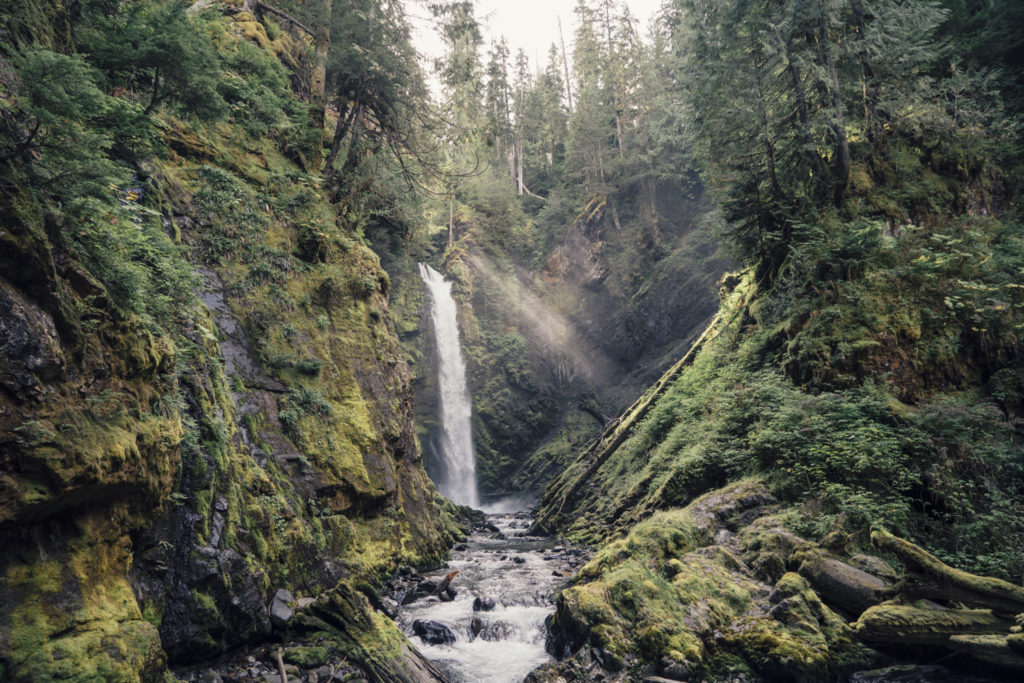
As it is the season for giving we want to recognize your support with a free download of Peter Funch’s expedition newspaper. Peter went to Mount Baker in Washington, USA for Project Pressure in September of this year. Using his practiced RGB tricolor separation he was able to reflect on the movement of the temporary against the inert mountain. The research undertaken for this project and the journey he and his team took were documented and can be saved in this downloadable PDF.
Download the Newspaper here.
When I Am Laid In Earth
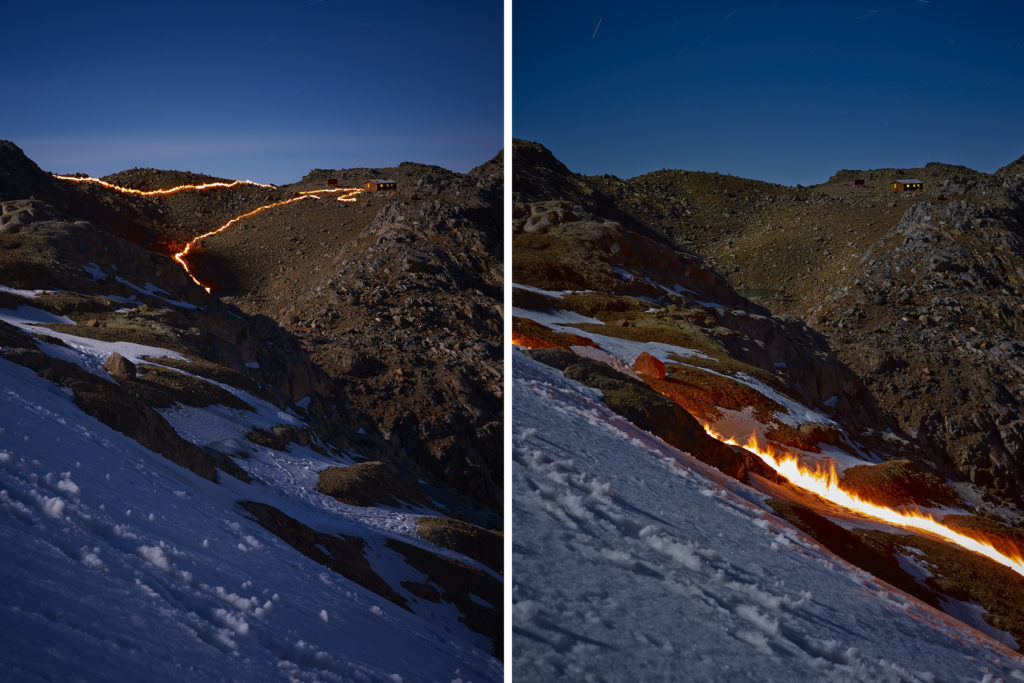
images ©Simon Norfolk
Mapping with a pyrograph, the melting away of the Lewis Glacier on Mt. Kenya.
By Simon Norfolk
These fire lines I have drawn represent where the front of the Lewis Glacier was at various times in the recent past; the years are given in the captions. In the distance, a harvest moon lights the poor, doomed glacier remnant; the gap between the fire and the ice ‘snout’ represents the relentless melting.
Project Pressure were the first people to inspire me to turn away from my usual fascination with warfare and to focus instead on the environment. They pointed me towards old maps, modern GPS data and mapping surveys from peer-reviewed journals. Equipping me with the correct maps was important to the documentary truthfulness of this project since I always saw it as mapping-in-reverse, a kind of unspooling of cartography. My work starts with the two-dimensional factuality of maps and then goes out and finds a kind of truth-on-the-ground, traces of time lying within the ground. Photographing time’s thickness, trying to expose it’s ‘layeredness,’ is a theme which has run through all of my work these last dozen years. It was clever of Project Pressure to see that what I find interesting about the landscapes of warfare could equally be applied to glacier retreat.
It seems entirely appropriate to make these pictures here. Mount Kenya is the eroded stump of a long-dead, 6,000m mega-volcano. Photographically, I hope to re-awaken its angry, magma heart. The mountain has an especially fierce demeanour, the peaks are childishly sheer and ragged, and since I first saw them I’ve been thinking of Gormenghast and Tolkien. The ‘Fire vs. Ice’ metaphor I employ is especially delicious for me. My fire is made from petroleum. My pictures contain no evidence that this glacier’s retreat is due to man-made warming (glaciers can retreat when the don’t get sufficient snow, or if the cloud cover thins, for example,) but it is nonetheless my belief that humans burning hydrocarbons are substantially to blame.
But there are romantic reasons to be here too. To be next to the ice is to feel privileged: like you are beside a colossal, sleeping giant. I imagine being close to a darted bull-elephant feels the same and I’m reminded of a 17th century Dutch painting of awestruck, bewildered burghers contemplating a stranded whalefish. Close-up one senses the glacier’s bulk, it’s coiled, dormant energy or it’s colossal longevity. And, of course, its cold, resigned indifference. One is hit by an overwhelming feeling of one’s own smallness and transience. Englishmen have been feeling this way about mountains for 300 years, since Romantic, Grand Tour travellers first astonished Swiss inn-keepers with the request for help in climbing to the heights. Nobody had done that before; for the fun of it, because it made you feel whole, because it feeds the soul. But this is the opposite – to think that in ten or twelve years this elegant, magnificent glacier will exist only in photographs is unbearable. The feeling I have for the losing of the Lewis can only be called grief.
So, see it now before it’s gone: get in quick before Mount Kenya is just an unadorned rocky stump, robbed of it’s crown. Unless of course you feel that flying around the world injecting tonnes of hot CO2 into the troposphere in order to witness the melting of Africa’s glaciers, is just a little too ironic.